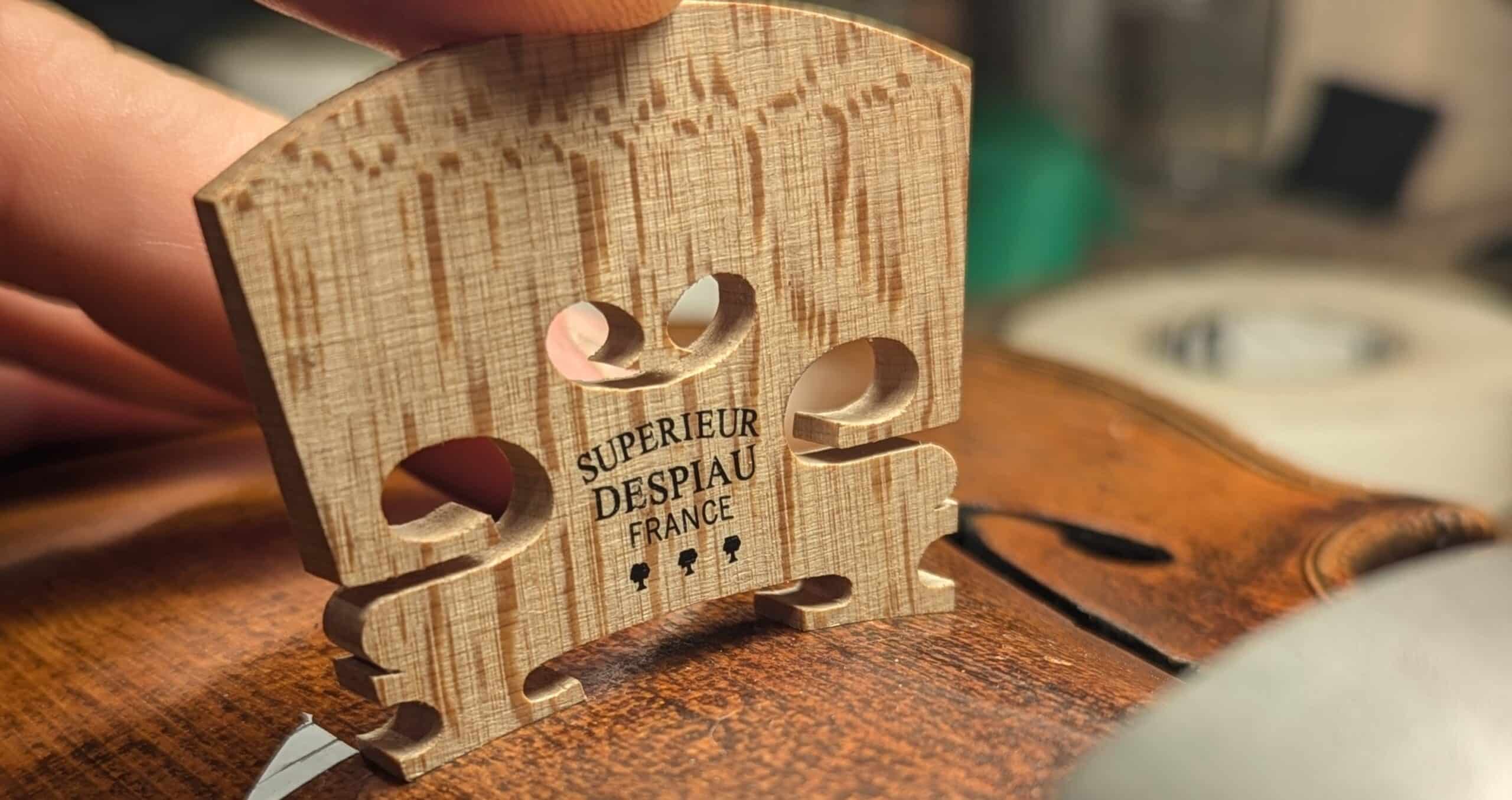
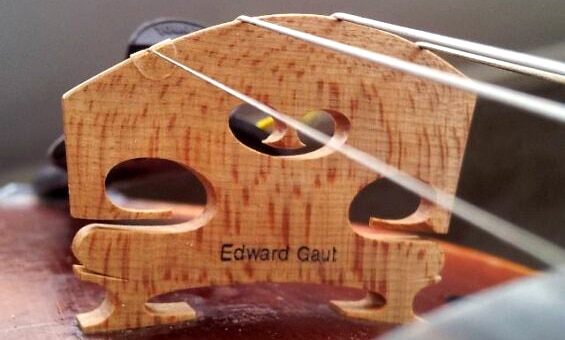
Edward Gaut Violins in Shipham, near Bristol, offers specialist bridge fitting for violins, violas and cellos. Each new bridge is individually selected, hand-carved and carefully fitted to suit the instrument, helping to achieve the best possible tone, response and playability.

A bridge is much more than simply a piece of shaped maple supporting the strings. Its height, thickness, shape and position all affect the way an instrument responds and sounds. A correctly fitted bridge allows the strings to transmit their vibrations efficiently to the body of the instrument, while also providing the correct string height and spacing for comfortable playing.

Individually Fitted Bridges

Every instrument is different, and a bridge should be fitted to the individual instrument rather than treated as a standard replacement part.

A new bridge starts as a carefully selected piece of maple. It is then hand-carved and shaped to match the arching and characteristics of your violin, viola or cello. The feet are accurately fitted to the instrument’s top, while the bridge is shaped to provide the appropriate string height, spacing and profile.

Careful attention is also given to the thickness and flexibility of the bridge. These details can have a significant effect on the instrument’s tone, response and overall playing characteristics.

New violin bridge hand-carved and fitted by Edward Gaut Violins

Violin Bridge Fitting

A new violin bridge can be required for a number of reasons. An existing bridge may have become distorted over time, been damaged, or simply reached the point where replacement is appropriate.

A correctly fitted violin bridge should provide the player with comfortable string height and spacing while allowing the instrument to respond freely. The bridge is carefully shaped and fitted to the individual violin rather than simply replacing the old bridge with a standard blank profile.

Viola Bridge Fitting

Violas vary considerably in size and design, therefore there is a greater choice of widths to choose from, making the fitting of the correct bridge particularly important. As with violin bridges, a new viola bridge needs to be shaped to suit the instrument while providing the appropriate string height, spacing and curvature.

Careful fitting can help maintain a good balance between playability, projection, tone and response.

Cello Bridge Fitting

Cello bridges are subject to considerable string tension and need to be accurately fitted to the instrument. The bridge feet must make full and even contact with the cello’s top, which can be particularly difficult on older cellos.

As with violas, cellos come in many widths between the ‘f’ holes and choosing the correct bridge width to suit the instrument is essential for achieving the goals of balance and tone.

A carefully fitted cello bridge can make a noticeable difference to the instrument’s response, tone and ease of playing.

When Does a Bridge Need Replacing?

A bridge may need replacing if it has become warped, worn at the string contact points or simply damaged. Bridges are very likely to gradually distort if they are not regularly checked and kept correctly positioned.

Bridge replacement isn’t always required. If you are unsure whether your bridge needs replacing, it is worth having it inspected before deciding on a new one. In some cases, an existing bridge may be suitable for adjustment rather than replacement.

Bridge Fitting Near Bristol

Edward Gaut Violins is based in Shipham, conveniently located for customers from Bristol and the surrounding area.

Call today on 01934 844547 or email on [email protected] to book in for your free consultation.

A testimonial from Sarah Evans

Took my rather sad and neglected handmade violin to Edward and he took it apart, removed the old glue including the lining, and stuck it all back together again. He added some new better quality pegs and tailpiece, sound post, bridge and filed the nut down as it was very high.

My violin is now a musical instrument again and I am very happy.

Would recommend highly.

Violin repair